
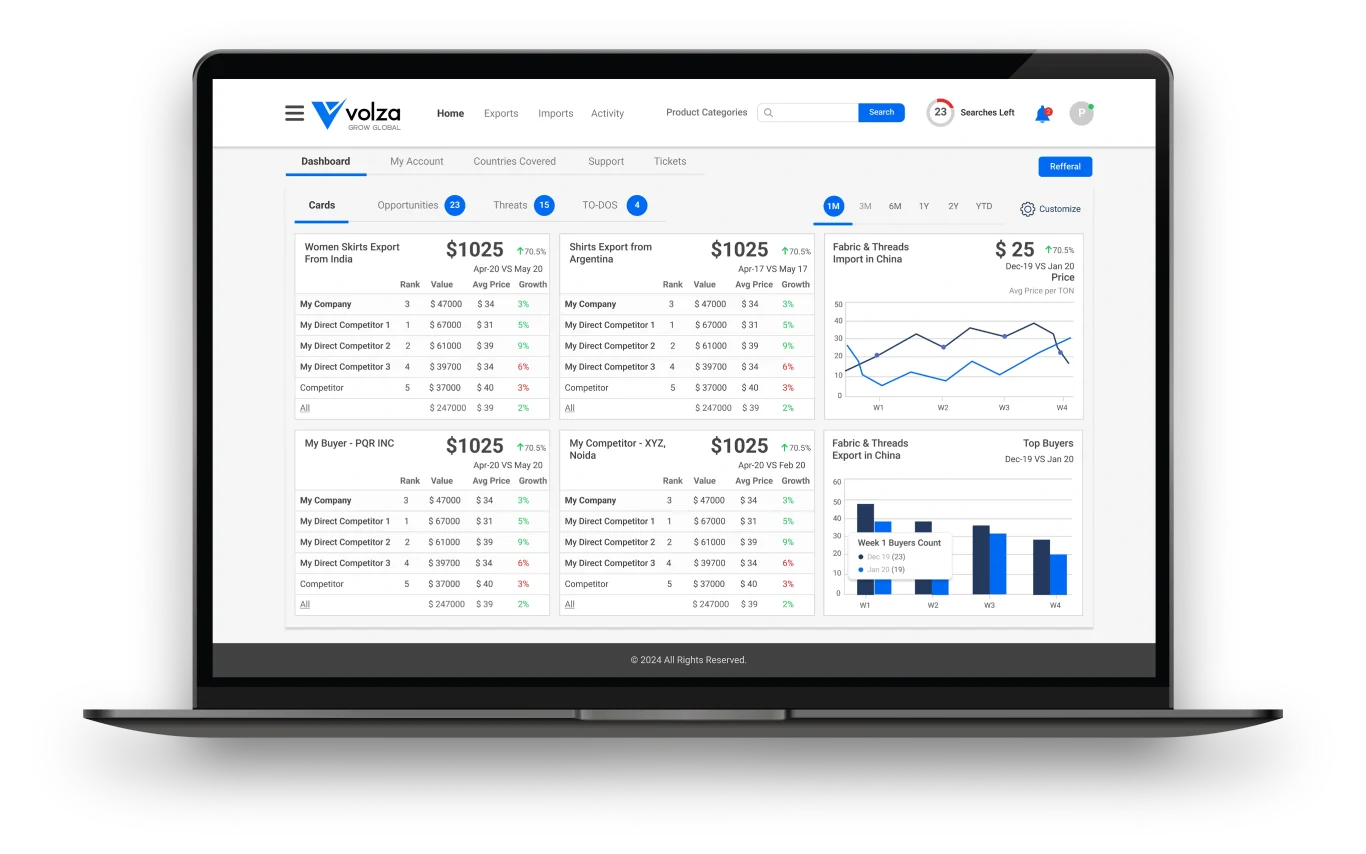
How Trade Intelligence Platforms Like Volza Are Transforming Global Import-Export Businesses
Global trade has grown rapidly in the last decade. Businesses of all sizes now have access to international markets suppliers and buyers. However entering global trade markets is not always simple.
Companies often struggle to find reliable suppliers identify profitable products or locate trustworthy buyers. Traditional market research methods such as trade fairs brokers and manual research can be slow and expensive.
Today modern businesses rely on trade intelligence platforms to solve these challenges. These platforms provide real trade data that helps companies analyze markets and discover opportunities.
One platform that has gained significant attention in the global trade industry is Volza.
Volza provides detailed insights into international trade by offering access to billions of shipment records across more than 200 countries. Businesses use these insights to discover buyers analyze competitors and identify profitable export opportunities.
In this article we will explore how trade intelligence platforms like Volza are helping businesses make smarter decisions in global import-export markets.
Why Data Is Essential in Global Trade?

International trade involves thousands of products markets and businesses. Without accurate information companies may struggle to identify opportunities or manage supply chains effectively.
Trade data helps businesses understand real market activity.
Instead of relying on assumptions or outdated reports companies can analyze actual shipment records to understand what products are being traded who is trading them and where they are being shipped.
Traditional Market Research vs Data-Driven Research
| Factor | Traditional Research | Trade Intelligence Platforms |
|---|---|---|
| Data Source | Trade shows brokers | Real shipment records |
| Speed | Slow | Instant analysis |
| Accuracy | Limited | High |
| Cost | Expensive | Cost-efficient |
| Insights | General trends | Detailed company-level insights |
This shift toward data-driven research allows businesses to reduce risks and make better strategic decisions.
What Is Volza?
Volza is a global trade intelligence platform designed to help businesses analyze international trade data.The platform collects and organizes shipment records from multiple countries and converts them into easy-to-analyze insights.
Businesses can use Volza to search for:
- Exporters and manufacturers
- Importers and buyers
- Product categories and HS codes
- Shipment volumes
- Trade routes and destinations
The platform’s database contains billions of shipment records making it one of the most comprehensive trade intelligence resources available.
Key Features of Volza
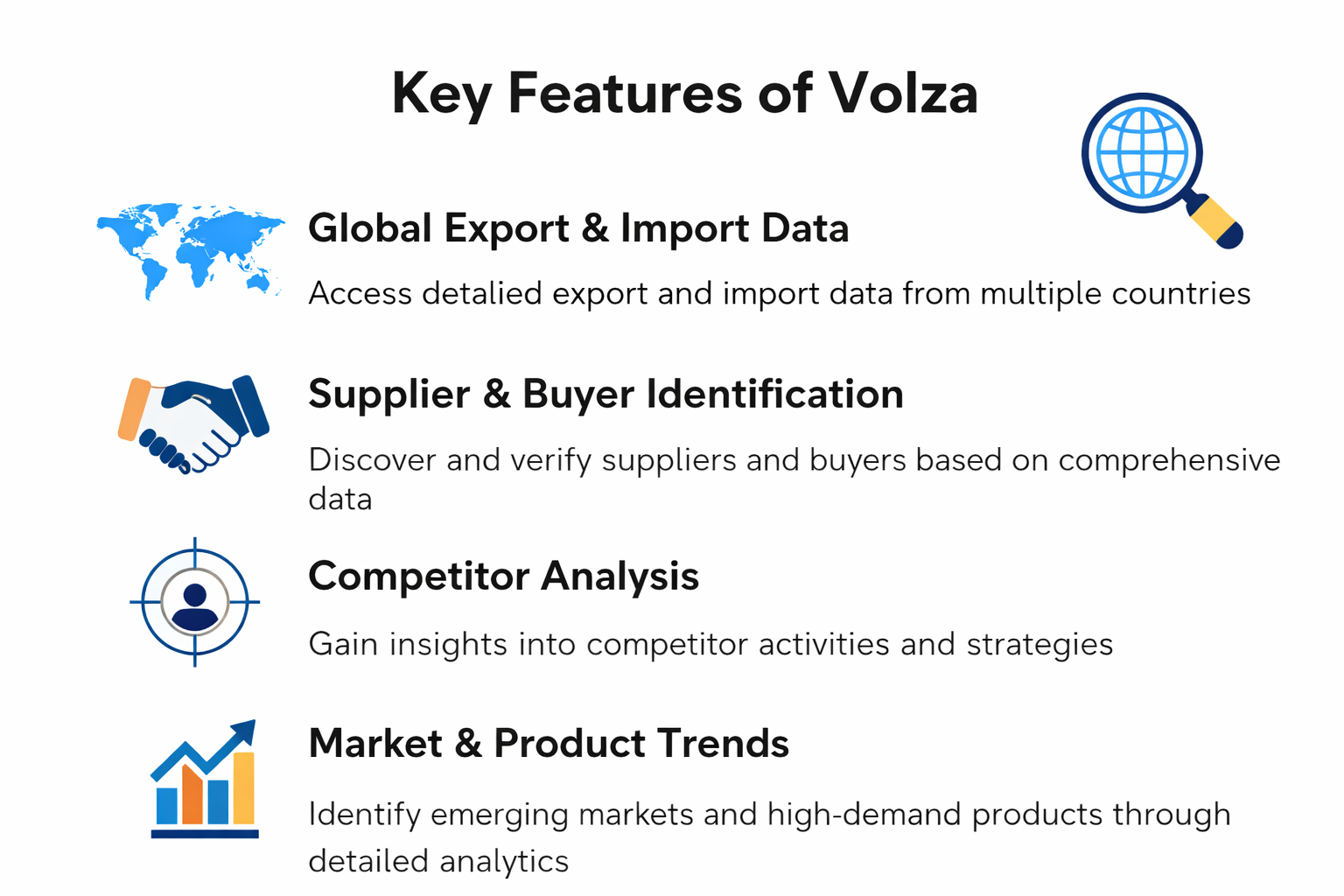
Trade intelligence platforms offer multiple features but Volza focuses on providing tools that help companies identify opportunities and analyze market behavior.
Below are some of the platform’s most important capabilities.
1. Massive Global Trade Database
One of the biggest advantages of using Volza is its extensive trade database.
The platform provides shipment-level data across multiple industries and countries.
Volza Database Overview
| Feature | Details |
|---|---|
| Shipment Records | Billions of records |
| Countries Covered | 200+ |
| Data Sources | Bills of lading and customs data |
| Industries | Multiple sectors |
| Data Insights | Buyers suppliers pricing trends |
With this level of data access businesses can analyze global trade patterns in minutes.
2. Finding International Buyers
One of the biggest challenges for exporters is identifying genuine buyers.
Many companies rely on cold outreach or trade exhibitions to connect with buyers. These methods often require significant time and investment.
Trade intelligence platforms simplify this process.
With Volza exporters can identify companies that are actively importing specific products.
Benefits for Exporters
| Benefit | Explanation |
|---|---|
| Buyer Discovery | Identify real importers |
| Market Insights | Discover high-demand regions |
| Sales Leads | Find verified potential customers |
| Market Expansion | Enter new international markets |
By targeting businesses that already import similar products exporters can improve their chances of securing deals.
3. Supplier Intelligence for Importers
Importers also face challenges when sourcing products internationally.
Finding reliable suppliers is critical for maintaining product quality and avoiding supply chain disruptions.
Volza provides supplier intelligence tools that help importers analyze supplier performance.
Supplier Evaluation Factors
| Factor | Why It Matters |
|---|---|
| Export History | Shows supplier experience |
| Shipment Frequency | Indicates reliability |
| Export Markets | Reveals supplier reach |
| Product Categories | Confirms specialization |
These insights allow businesses to make informed sourcing decisions.
4. Competitive Intelligence
Understanding competitor behavior is essential in global markets.
Trade intelligence platforms provide insights into competitor activities helping businesses stay competitive.
With Volza companies can analyze competitor shipment records to understand:
- Which suppliers competitors use
- Which countries they export to
- How frequently they ship products
- Their market strategies
Competitive Analysis Insights
| Insight Type | Business Advantage |
|---|---|
| Supplier Identification | Discover alternative suppliers |
| Market Expansion | Identify new markets |
| Pricing Trends | Understand price positioning |
| Shipment Volumes | Analyze competitor scale |
These insights allow businesses to refine their strategies and improve competitiveness.
5. Market Trend Analysis
Global markets constantly change due to shifts in demand economic conditions and supply chain dynamics.
Trade intelligence platforms provide valuable market insights that help businesses stay ahead of these changes.
Market Insights Available Through Trade Data
| Insight | Example |
|---|---|
| High-Demand Products | Fast-growing export items |
| Emerging Markets | Countries increasing imports |
| Price Trends | Changes in product pricing |
| Supply Chain Shifts | New supplier networks |
By analyzing these insights companies can adjust strategies and focus on profitable opportunities.
How Different Businesses Use Volza
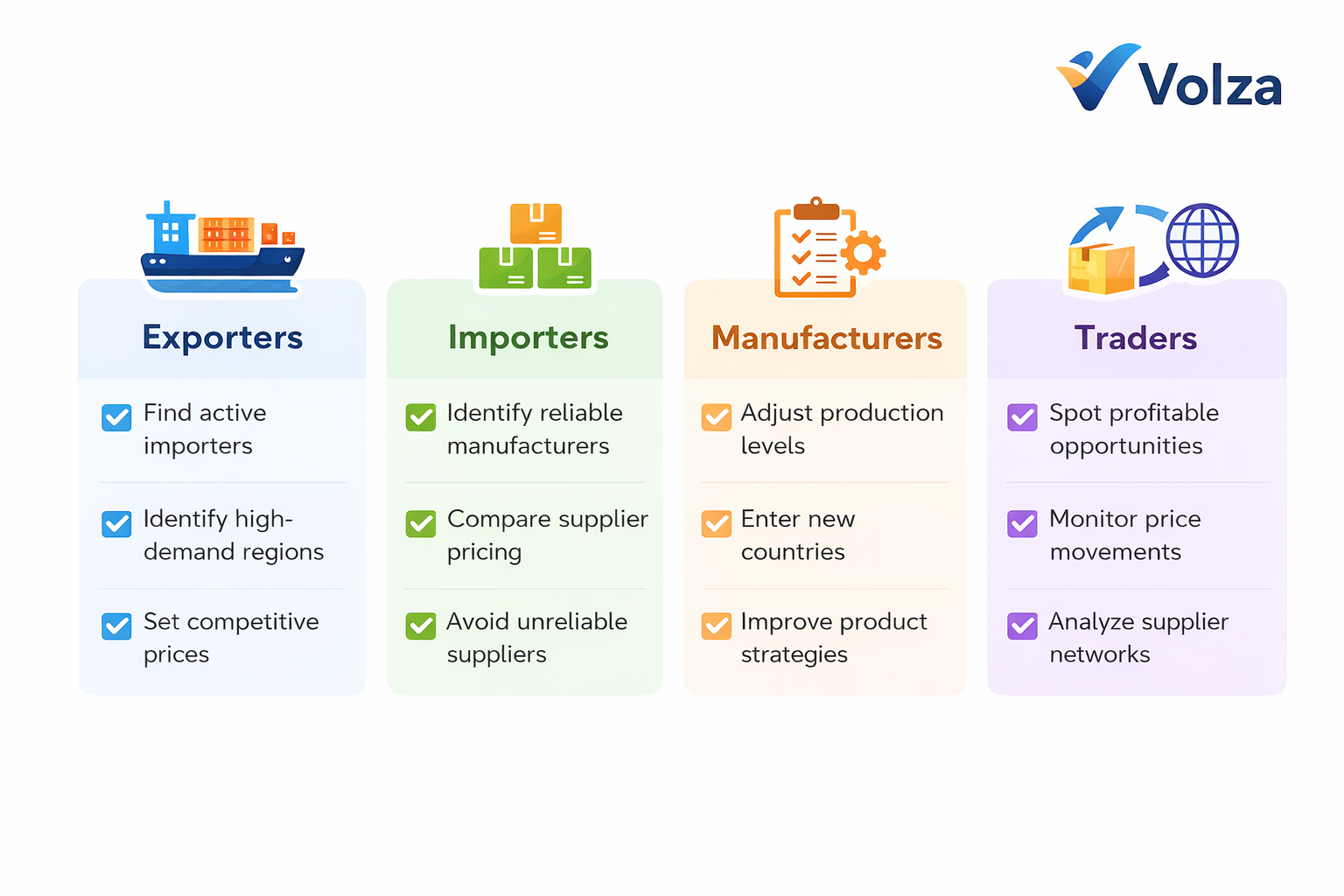
Trade intelligence tools benefit multiple industries and business types.
Below are some examples.
Export Companies
Exporters use trade intelligence platforms to find new buyers and expand into new markets.
Exporter Use Cases
| Use Case | Benefit |
|---|---|
| Buyer Discovery | Find active importers |
| Market Research | Identify high-demand regions |
| Pricing Analysis | Set competitive prices |
Importers
Importers use trade intelligence tools to evaluate suppliers and manage sourcing strategies.
Importer Use Cases
| Use Case | Benefit |
|---|---|
| Supplier Research | Identify reliable manufacturers |
| Cost Analysis | Compare supplier pricing |
| Risk Reduction | Avoid unreliable suppliers |
Manufacturers
Manufacturers analyze trade data to understand global demand for their products.
Manufacturer Benefits
| Insight | Impact |
|---|---|
| Demand Trends | Adjust production levels |
| Market Opportunities | Enter new countries |
| Competitive Insights | Improve product strategies |
Supply Chain Teams
Supply chain managers rely on trade intelligence platforms to improve logistics planning and risk management.
Supply Chain Advantages
| Advantage | Explanation |
|---|---|
| Supplier Visibility | Understand supplier networks |
| Risk Monitoring | Identify potential disruptions |
| Strategic Planning | Optimize sourcing strategies |
Benefits of Using Trade Intelligence Platforms
Trade intelligence platforms provide several advantages compared to traditional research methods.
Major Business Benefits
| Benefit | Description |
|---|---|
| Faster Market Research | Analyze global markets quickly |
| Better Lead Generation | Identify verified buyers |
| Improved Supplier Selection | Evaluate suppliers using real data |
| Competitive Advantage | Monitor competitor strategies |
| Risk Reduction | Make data-driven decisions |
Companies that leverage trade intelligence tools often gain a significant advantage in global markets.
The Future of Trade Intelligence

The import-export industry is becoming increasingly technology-driven.
In the future trade intelligence platforms will likely integrate advanced technologies such as:
- Artificial intelligence
- Predictive analytics
- Automated trade alerts
- Real-time market monitoring
These innovations will allow businesses to react quickly to market changes and make smarter strategic decisions.
Challenges Businesses Face Without Trade Data
Companies that do not use trade intelligence tools may encounter several challenges.
Common Challenges
| Challenge | Impact |
|---|---|
| Limited Market Insights | Missed opportunities |
| Difficulty Finding Buyers | Slow business growth |
| Supplier Risks | Quality or delivery issues |
| High Research Costs | Inefficient operations |
Trade intelligence platforms help businesses overcome these obstacles by providing structured and reliable data.
Why Data-Driven Trade Strategies Are the Future?
Global trade is becoming more competitive every year.
Businesses that rely on guesswork or outdated research methods may struggle to keep up with rapidly changing markets.
Data-driven strategies allow companies to:
- Identify profitable export products
- Discover international buyers
- Find reliable suppliers
- Monitor competitor strategies
- Track global market trends
Trade intelligence platforms like Volza provide the insights needed to make these strategies possible.
Final Thoughts
Global trade offers tremendous opportunities for businesses but success requires accurate information and strategic decision-making.
Trade intelligence platforms have transformed the way companies research markets discover buyers and manage supply chains.
Volza stands out as a powerful solution that provides access to billions of shipment records and advanced analytics tools. Businesses can use these insights to explore new markets improve sourcing strategies and gain a competitive advantage in international trade.
As global commerce continues to expand companies that embrace data-driven trade strategies will be better positioned to grow innovate and succeed in the competitive world of import-export.