
Is RingCentral Worth the Cost in 2026?
Business communication used to be simple.
You had a desk phone. Maybe an email account. Meetings happened in a conference room.
In 2026 that world feels distant.
Today’s companies operate across cities countries and time zones. Teams work remotely. Sales calls happen from mobile apps. Customers expect instant responses across phone SMS and chat. And businesses rely on communication platforms not just for connection — but for productivity analytics and growth.
That shift raises an important question:
Is RingCentral worth the cost in 2026?
RingCentral has positioned itself as a unified cloud communications platform designed for growing businesses. But with multiple alternatives on the market — from basic VoIP providers to bundled collaboration suites — decision-makers want clarity.
This guide breaks down the real value behind RingCentral’s pricing what you’re paying for and whether it makes financial sense for different business sizes.
The Cost of Communication Has Changed
When businesses evaluate software costs they often look at subscription price alone.
But communication tools don’t exist in isolation.
If you’re using:
- One tool for calls
- Another for video meetings
- Another for internal messaging
- A separate CRM integration
- And maybe another support tool
You’re not paying one subscription — you’re paying for fragmentation.
The real cost isn’t just monthly pricing. It’s:
- Tool overlap
- Training complexity
- Time lost switching apps
- Reporting gaps
- IT overhead
RingCentral’s value proposition isn’t simply “cheap phone service.” It’s consolidation.
What You’re Actually Paying For
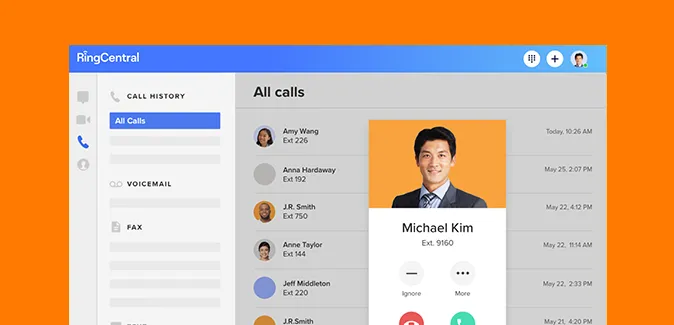
RingCentral bundles several business-critical tools into one system:
- Cloud-based VoIP phone system
- Team messaging
- Video conferencing
- SMS/MMS business texting
- Call routing and IVR
- Analytics and reporting
- AI-powered summaries and transcriptions
- CRM integrations
- Mobile and desktop apps
When you compare RingCentral to a traditional PBX system plus separate collaboration tools the cost equation changes.
You’re not just buying calling.
You’re buying operational structure.
2026 Pricing Overview
RingCentral uses tiered pricing based on features and team needs.
While exact numbers vary by region and promotions plans typically fall into three categories:
- Core Plan
Designed for small teams needing voice messaging and meetings.
- Advanced Plan
Adds CRM integrations call monitoring and more automation tools.
- Ultra Plan
Includes deeper analytics larger meeting capacity and advanced reporting features.
Annual billing generally provides noticeable savings compared to monthly billing often reducing overall costs significantly.
There is usually a free trial period available allowing businesses to test the platform before committing.
Breaking Down the Real Value
To determine if RingCentral is worth the cost you need to look beyond the subscription price.
1. Hardware Savings
Traditional phone systems require:
- PBX hardware
- Maintenance contracts
- On-site installation
- Upgrades and repairs
- RingCentral eliminates that.
No physical infrastructure. No hardware depreciation.
For growing businesses that alone can justify the subscription.
2. Reduced App Overload
If RingCentral replaces:
- Zoom (for meetings)
- Slack (for messaging)
- A VoIP service
- SMS platform
- Call analytics tool
The combined savings can offset its pricing entirely.
3. Scalability Without Migration
One of the hidden costs in business communication is switching platforms.
If you start with a basic tool and outgrow it migration can mean:
- Data transfer headaches
- Staff retraining
- Workflow disruption
RingCentral scales from small teams to large organizations without forcing re-platforming.
That long-term stability matters.
4. Productivity Gains
Time saved equals money saved.
Features like:
- Call transcription
- Automated summaries
- Integrated messaging
- Centralized analytics
Reduce manual work and communication friction.
In 2026 productivity tools aren’t luxuries — they’re competitive advantages.
When RingCentral Feels Expensive
To be fair RingCentral may feel costly if:
- You only need basic calling
- You have a very small team
- You already use bundled collaboration tools from another provider
- You don’t need analytics or advanced routing
For businesses that simply need a cheap phone line simpler VoIP providers may cost less.
But RingCentral isn’t built to compete on bare minimum pricing.
It competes on unified value.
Real-World Cost Scenarios
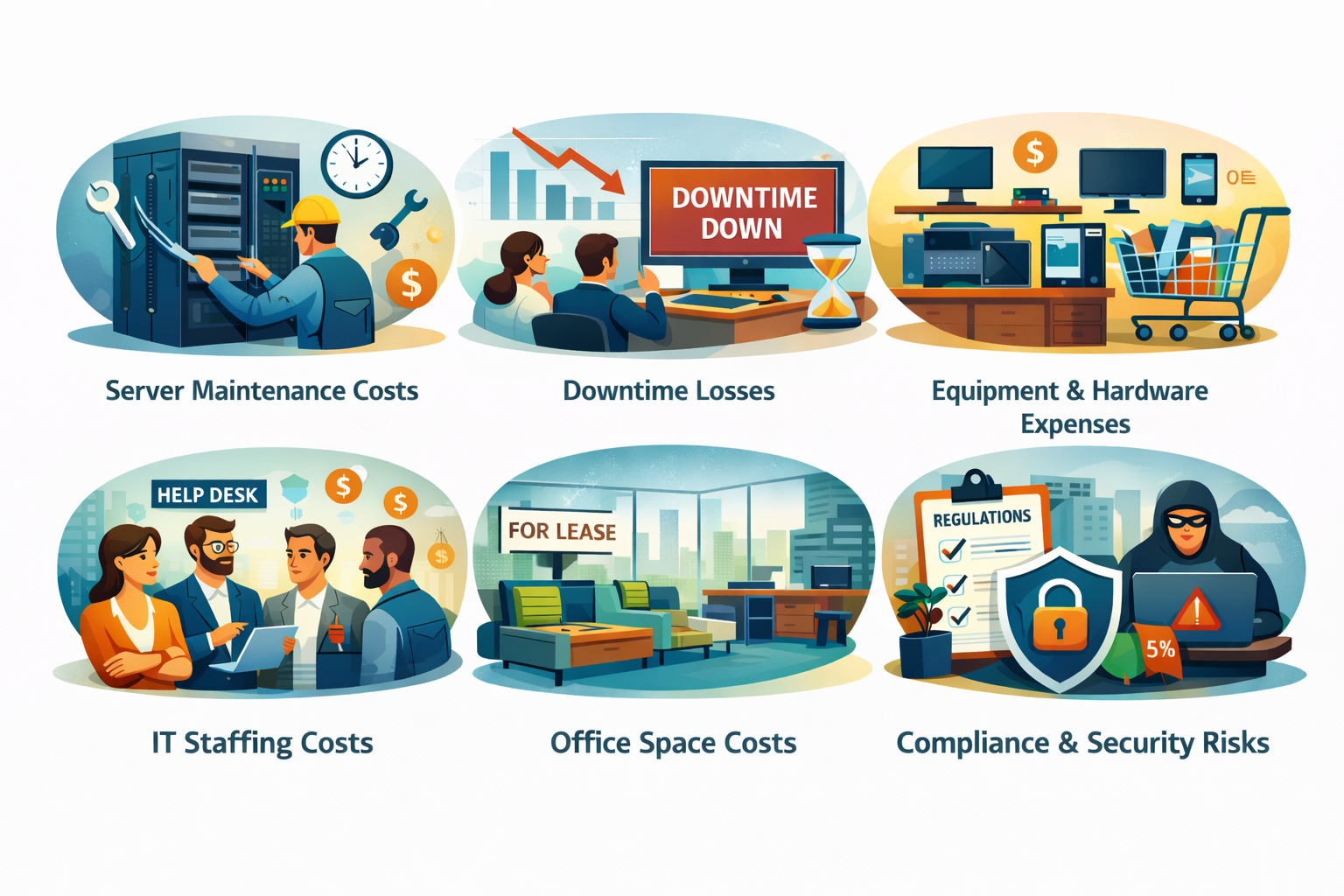
Let’s look at different business sizes.
Scenario 1: Solo Founder or Freelancer
Needs:
- Basic business number
- Occasional video meetings
RingCentral may be more than necessary here.
Lower-cost VoIP solutions could suffice.
- Verdict: Possibly overpowered for this stage.
Scenario 2: 5–15 Employee Startup
Needs:
- Professional phone presence
- Internal messaging
- Remote meetings
- Scalability
Here RingCentral begins to make financial sense. Consolidation saves money. Annual billing reduces cost further.
- Verdict: Good fit if growth is expected.
Scenario 3: 20–75 Employee Growing Company
Needs:
- Structured call routing
- Sales call tracking
- CRM integration
- Team collaboration
This is where RingCentral shines.
The ability to manage communication centrally and integrate with workflows delivers measurable value.
Verdict: Strong ROI potential.
Scenario 4: 100+ Employee Organization
Needs:
- Multi-location management
- Analytics and reporting
- Department-based routing
- High meeting capacity
RingCentral becomes less about cost and more about operational consistency.
Enterprise alternatives may be more customizable but often come with higher complexity.
- Verdict: Cost justified by operational stability.
Pricing Decision Checklist for Different Business Sizes
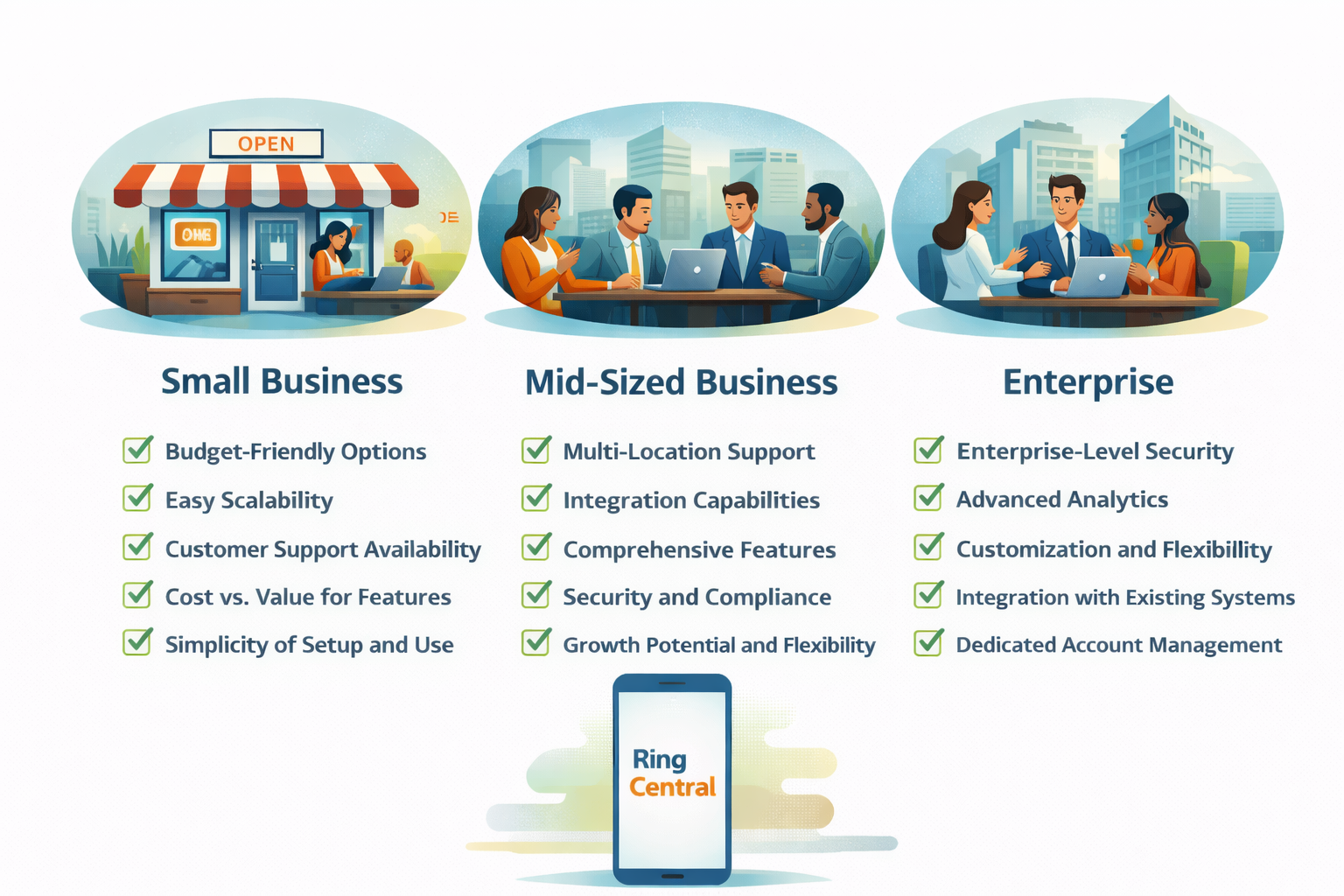
Use this checklist to determine whether RingCentral’s pricing makes sense for your organization.
For Solo Operators or 1–3 Person Teams
Ask yourself:
- Do I need advanced call routing?
- Will I use team messaging features?
- Do I require analytics?
- Am I planning to grow in the next 12 months?
If most answers are “no” a simpler plan may suffice.
For Small Teams (5–20 Employees)
Ask:
- Are we using multiple communication tools?
- Is call management becoming messy?
- Do we need professional auto-attendants?
- Would annual billing savings offset the cost?
If “yes” to two or more RingCentral likely makes financial sense.
For Mid-Sized Businesses (20–100 Employees)
Evaluate:
- Are we integrating communication with CRM?
- Do managers need reporting insights?
- Are we onboarding new employees regularly?
- Is IT overhead a concern?
If communication is central to operations RingCentral’s cost is often justified.
For Larger Teams (100+ Employees)
Consider:
- Do we require multi-location support?
- Are we managing complex call routing?
- Is scalability a priority?
- Do we want AI-based productivity tools?
If your organization is growing steadily RingCentral’s structured platform can reduce long-term disruption.
RingCentral vs Cheaper Alternatives
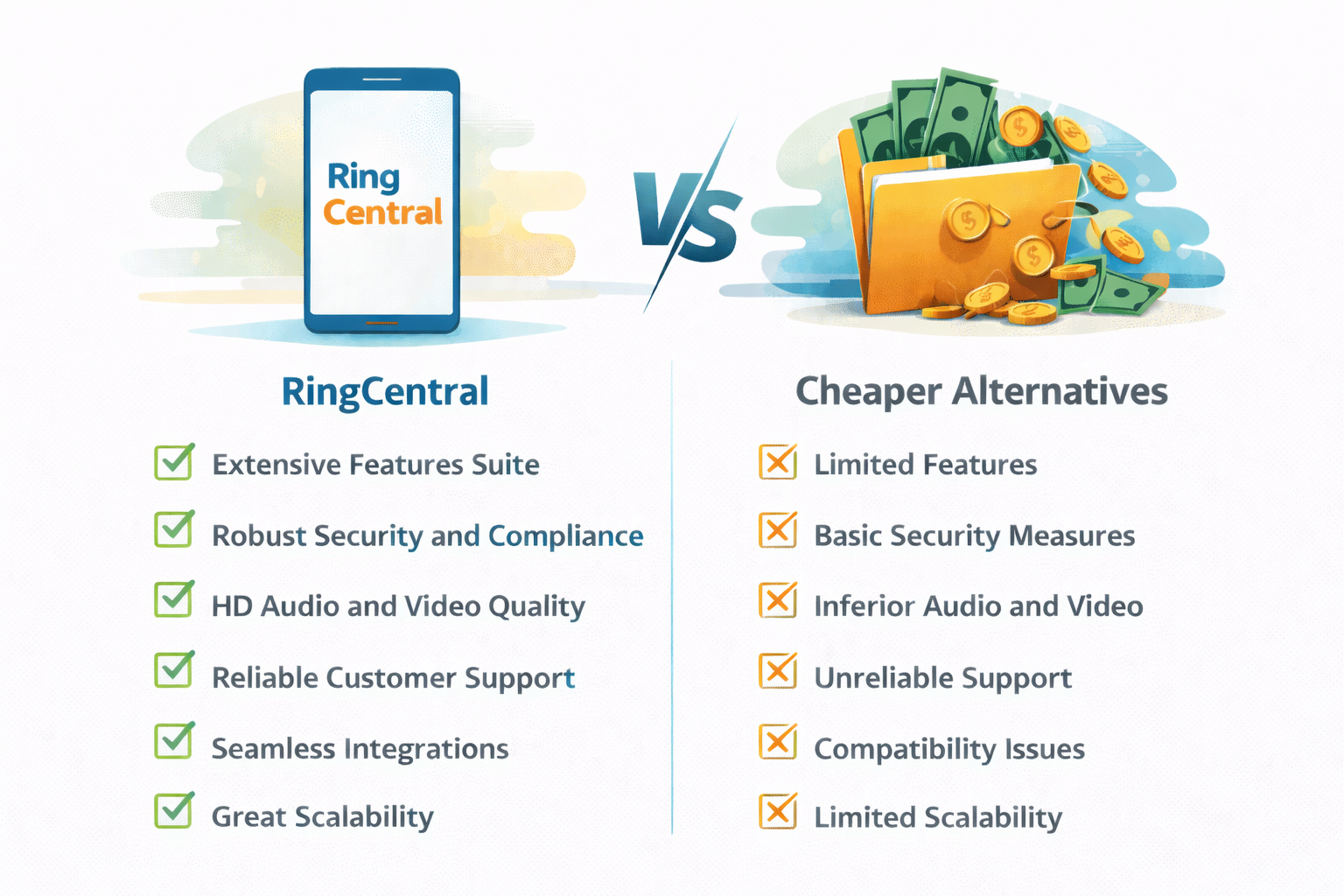
Cheaper VoIP services focus on:
- Basic calling
- Limited routing
- Minimal integration
Collaboration tools focus on:
- Messaging
- Video
RingCentral combines both.
The price reflects integration not just features.
The real question isn’t “Is it cheaper?”
It’s “Does it eliminate other expenses?”
Intangible Value Factors
Some benefits are harder to quantify but matter significantly:
- Professional Image: Auto-attendants and structured call flows give even small teams enterprise credibility.
- Reliability: Cloud-based redundancy reduces downtime risks.
- Consistency: Everyone uses the same system — reducing confusion.
- Simplicity: Fewer tools mean fewer training sessions.
The 2026 Context: Why It Matters Now
Hybrid work isn’t going away.
Customers expect immediate response across channels.
Internal collaboration needs to be frictionless.
In this environment fragmented communication systems become liabilities.
RingCentral aligns with the trend toward:
- Tool consolidation
- AI-assisted productivity
- Scalable infrastructure
- Cloud-first operations
The question is no longer whether you need structured communication.
It’s whether your current system supports growth.
Final Verdict: Is RingCentral Worth It?
RinCentral may not be the cheapest communication solution in 2026.
But it isn’t trying to be.
It’s designed for companies that:
- Want fewer tools
- Need scalability
- Value integration
- Prioritize reliability
- Expect growth
For startups planning to scale mid-sized businesses managing complexity and larger teams seeking operational consistency — RingCentral is often worth the cost.
For solo operators or businesses with very minimal communication needs it may be more than necessary.Ultimately the value depends on one factor:
Is communication central to your business operations?
If the answer is yes RingCentral is likely an investment — not an expense.