
The Ultimate Guide to Modern B2B Outreach with Lemlist
In today’s digital world reaching the right customers is harder than ever. Businesses send hundreds of emails LinkedIn messages and follow-ups every week yet many of these efforts fail to generate meaningful responses.
Why? Because most outreach feels automated generic and impersonal.
That’s where modern outreach platforms come in.
Tools like Lemlist are changing the way companies approach lead generation and sales outreach. Instead of sending mass emails that end up in spam folders businesses can now create personalized multichannel campaigns that feel human and relevant.
This guide will walk you through how modern outreach works why personalization matters and how platforms like Lemlist help businesses generate more replies meetings and customers.
The Problem with Traditional Outreach
For many years companies relied on traditional cold email strategies. These usually involved sending the same message to thousands of contacts in the hope that a few people would respond.
The results were often disappointing.
Here are the most common problems businesses face with traditional outreach.
1. Low Response Rates
Generic messages rarely get replies. People receive dozens of promotional emails daily and most are ignored.
2. Emails Landing in Spam
Sending large volumes of emails without proper setup often damages your sender's reputation.
3. Time-Consuming Follow-Ups
Sales teams spend hours manually sending reminders and follow-up emails.
4. Poor Lead Targeting
Without proper tools many companies reach out to the wrong prospects.
These challenges make it difficult for businesses to scale their outreach efforts effectively.
Modern outreach platforms solve these issues by combining automation with personalization.
What Is Lemlist?
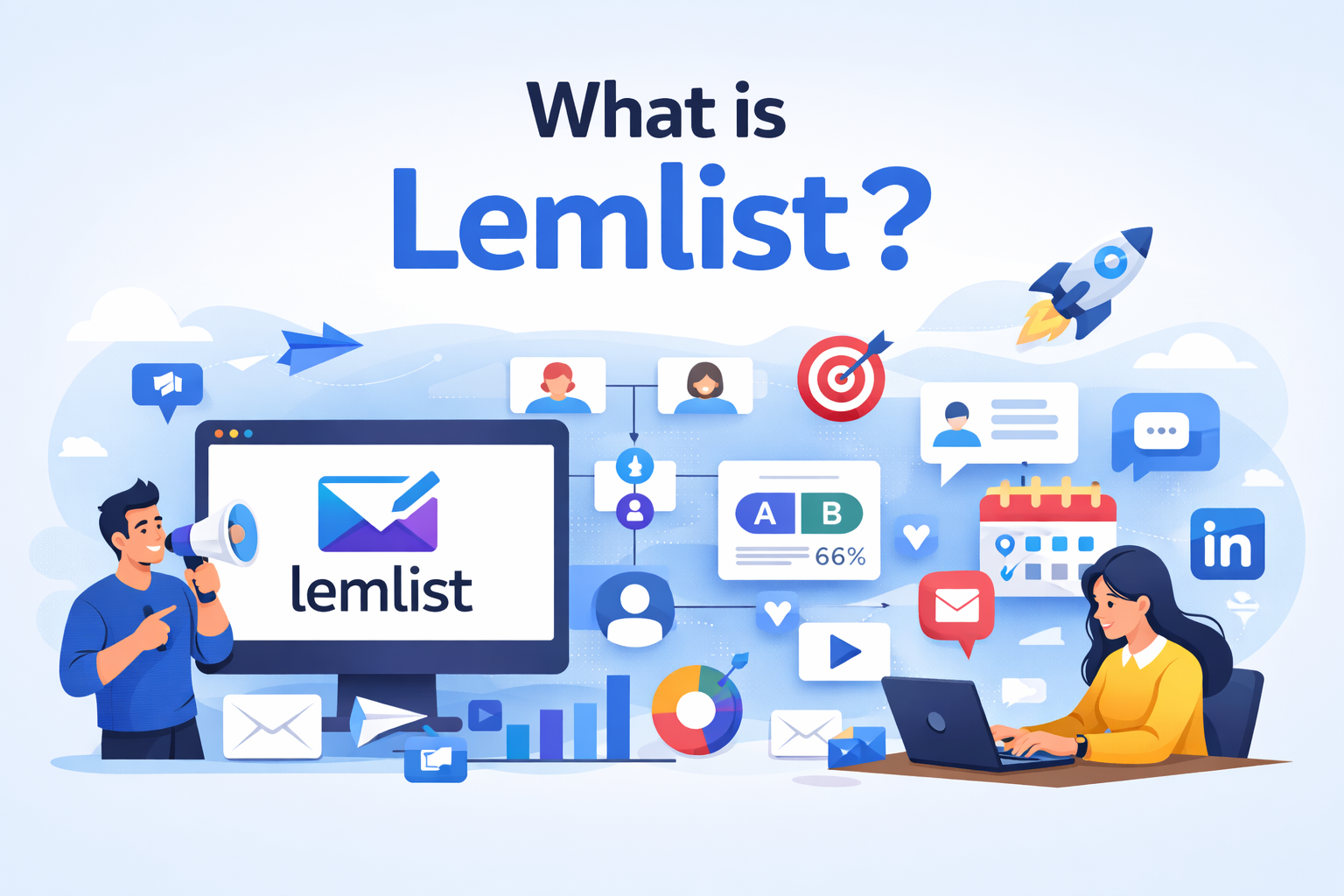
Lemlist is a sales outreach platform designed to help businesses find leads personalize messages and automate outreach campaigns across multiple channels.
Instead of sending basic cold emails users can create sequences that include email LinkedIn actions and follow-ups from a single platform.
The platform focuses on three major goals:
- Finding qualified leads
- Personalizing outreach at scale
- Improving email deliverability
By combining these features businesses can build outreach campaigns that feel personal while still reaching hundreds or thousands of prospects.
Why Multichannel Outreach Is the Future?
One of the biggest changes in sales outreach is the shift from single-channel communication to multichannel communication.
Instead of relying only on email modern outreach combines several touchpoints.
For example:
- Email introduction
- LinkedIn connection request
- Follow-up message
- Call or voicemail
- Final reminder email
Using multiple channels increases the chances of reaching prospects where they are most active.
Multichannel vs Traditional Outreach
| Feature | Traditional Outreach | Multichannel Outreach |
|---|---|---|
| Communication channels | Email only | Email LinkedIn calls |
| Personalization | Limited | Highly personalized |
| Follow-ups | Manual | Automated |
| Engagement rate | Low | Higher |
| Workflow efficiency | Slow | Automated |
This approach ensures that your message does not get lost in crowded inboxes.
Key Features of Lemlist
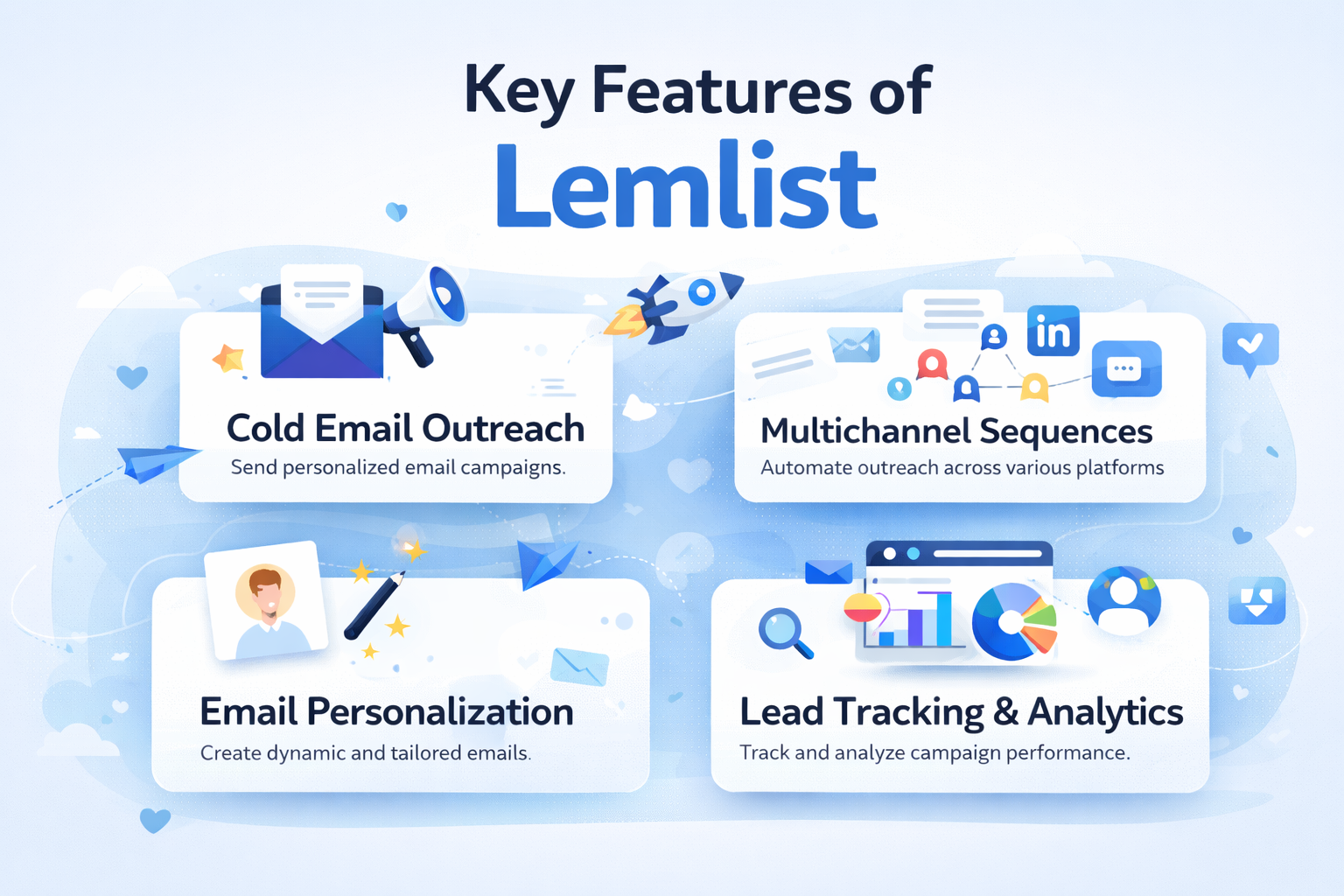
Modern outreach tools must do more than just send emails. They need to help businesses manage leads personalize communication and track performance.
Here are some of the most important features.
1. Lead Generation and Contact Discovery
Finding the right prospects is the first step in any outreach campaign.
Lemlist provides access to a large database of business contacts allowing users to identify potential customers that match their ideal client profile.
Users can filter leads based on criteria such as:
- Industry
- Job role
- Company size
- Location
- Technology used by companies
This ensures that outreach campaigns target relevant prospects instead of random contacts.
2. Personalized Outreach at Scale
Personalization is one of the biggest factors affecting email response rates.
Modern outreach tools allow businesses to customize messages for each prospect automatically.
Examples of personalization include:
- Adding the prospect’s name and company
- Referencing their website or industry
- Including personalized images or videos
- Using dynamic content variables
These small touches make outreach messages feel authentic rather than automated.Advanced personalization can significantly improve engagement.
3. Automated Email Sequences
Sending one email rarely produces results. Most successful outreach campaigns require multiple follow-ups.
Automation allows businesses to schedule entire sequences of emails in advance.
Example sequence:
| Step | Message Type | Timing |
|---|---|---|
| Step 1 | Introduction email | Day 1 |
| Step 2 | Follow-up email | Day 3 |
| Step 3 | LinkedIn message | Day 5 |
| Step 4 | Reminder email | Day 7 |
| Step 5 | Final follow-up | Day 10 |
With automation sales teams no longer need to remember when to follow up.
The system handles it automatically.
4. Multichannel Campaign Management
Instead of managing separate tools for e
mail and LinkedIn outreach users can run campaigns from one dashboard.
This unified approach allows teams to:
- Track conversations across channels
- Schedule LinkedIn interactions
- Send automated follow-ups
- Manage responses in one place
This simplifies the outreach process and improves productivity.
5. Email Deliverability Optimization
One of the biggest problems with cold outreach is emails ending up in spam folders.
Modern outreach platforms include tools to improve deliverability.
These include:
- Email warm-up systems
- Inbox rotation
- Sender reputation monitoring
- Deliverability recommendations
For example Lemlist includes a built-in warm-up feature that gradually builds sender reputation and helps emails reach inboxes instead of spam folders.
This feature alone can dramatically improve campaign performance.
Benefits of Using Lemlist for Outreach
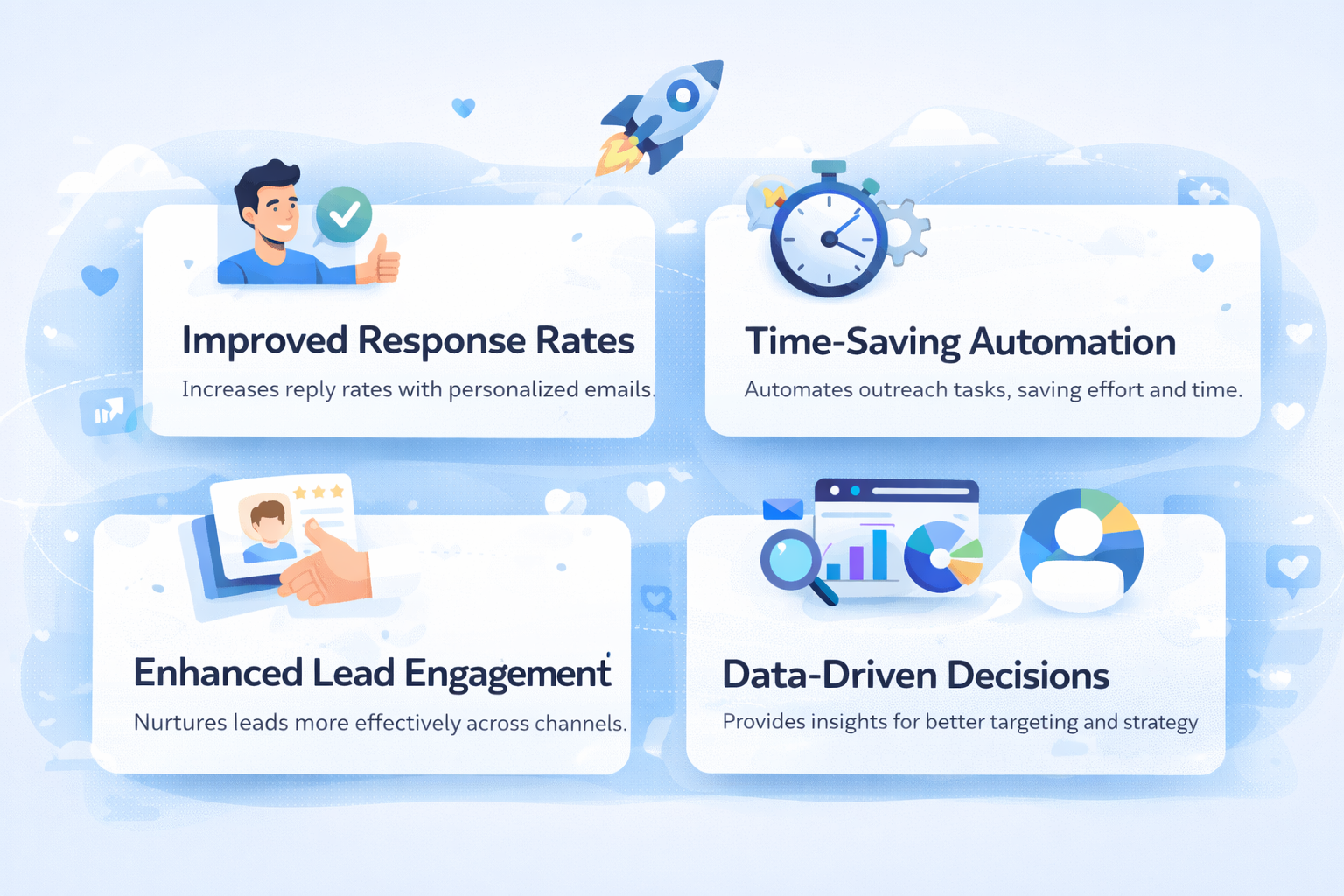
Businesses use outreach tools for one simple reason: to generate more leads and sales opportunities.
Here are some of the key benefits.
- Higher Reply Rates
Personalized outreach messages receive significantly more replies than generic ones.
Adding personalized elements such as images custom introductions or industry references makes emails stand out.
- Time Savings
Automation eliminates repetitive tasks such as sending follow-ups or organizing leads.
Sales teams can focus on closing deals instead of managing spreadsheets and manual outreach.
- Improved Targeting
Lead databases and filtering tools allow businesses to target prospects who are more likely to be interested in their product.
This increases conversion rates and reduces wasted effort.
- Scalable Outreach
Automation allows companies to reach hundreds or thousands of prospects without sacrificing personalization.
This makes it possible for startups and small teams to compete with larger companies.
Example Outreach Workflow Using Lemlist
Below is a typical outreach workflow used by many B2B companies.
Step 1: Identify Your Ideal Customer
Define your target audience based on:
- Industry
- Company size
- Decision-maker role
Step 2: Build a Prospect List
Use lead databases or LinkedIn searches to create a list of potential customers.
Step 3: Personalize Your Message
Create email templates with personalized variables such as:
- Name
- Company
- Industry references
Step 4: Launch a Multichannel Campaign
Schedule outreach messages across different channels.
Example campaign:
| Day | Action |
|---|---|
| Day 1 | Intro email |
| Day 3 | LinkedIn connection |
| Day 5 | Follow-up email |
| Day 7 | LinkedIn message |
| Day 10 | Final reminder |
Step 5: Monitor Campaign Performance
Track metrics such as:
- Open rate
- Reply rate
- Meeting bookings
- Conversion rate
Use these insights to optimize future campaigns.
Outreach Metrics That Matter
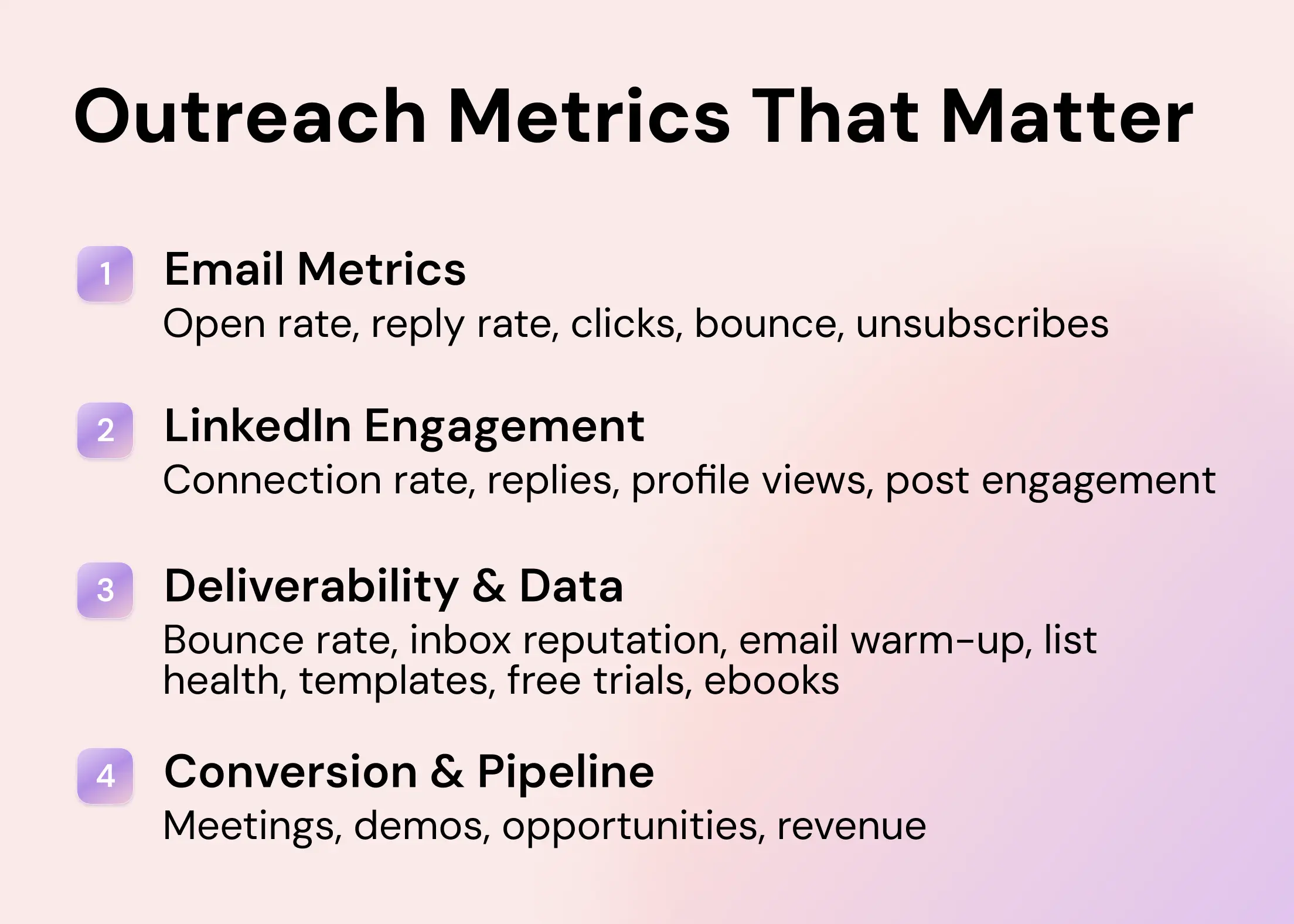
Tracking the right metrics is essential for improving outreach campaigns.
Here are the most important ones.
| Metric | What It Means |
|---|---|
| Open Rate | Percentage of people who open your email |
| Reply Rate | Percentage of people who respond |
| Bounce Rate | Emails that fail to deliver |
| Conversion Rate | Leads that become customers |
| Meeting Rate | Prospects who schedule calls |
Improving these metrics can significantly increase sales pipeline growth.
Best Practices for Successful Outreach
Even with powerful tools successful outreach requires strategy and discipline.
Here are some proven best practices.
- Keep Messages Short
- Long emails rarely get read.
- The most effective outreach emails are concise and clear.
Focus on Value
- Instead of talking about your product focus on the prospect’s problems.
- Explain how you can help them.
Personalize the First Line
- The opening sentence determines whether someone continues reading.
- Mention something specific about the prospect or their company.
Avoid Spam Trigger Words
- Words like “free” “discount” and “guaranteed” can trigger spam filters.
- Use natural language instead.
Test Different Variations
- A/B testing allows businesses to experiment with different subject lines messages and call-to-actions.
- Small improvements can dramatically increase results.
Potential Limitations to Consider
While outreach platforms offer many advantages they are not perfect.
Businesses should also consider a few limitations.
- Pricing
Some outreach platforms require monthly subscriptions which may be expensive for larger teams.
- Learning Curve
New users may need time to understand how to set up campaigns effectively.
- Over-Automation Risk
Too much automation can make messages feel robotic.
The key is balancing automation with personalization.
Who Should Use Lemlist?
Outreach platforms are useful for many types of professionals.
Sales Teams: Sales representatives can automate prospecting and focus on closing deals.
Marketing Agencies: Agencies use outreach tools to generate leads for their clients.
Startups: Startups often rely on outbound outreach to acquire their first customers.
Freelancers: Freelancers can use personalized outreach to find new clients.
The Future of Outreach Automation

Sales outreach is evolving rapidly.
Several trends are shaping the future of the industry.
- AI-Driven Personalization
Artificial intelligence is making it easier to personalize outreach messages at scale.
- Data-Driven Targeting
Better data allows businesses to identify high-quality leads more accurately.
- Integrated Sales Platforms
Future tools will combine outreach CRM systems and analytics in one place.
- Hyper-Personalized Campaigns
Instead of mass campaigns companies will create highly tailored outreach for specific audiences.
These innovations will make outreach more efficient and effective.
Final Thoughts
Modern outreach is no longer about sending thousands of generic emails and hoping for a response.
Successful businesses now rely on personalized data-driven multichannel strategies.
Platforms like Lemlist help companies streamline this process by combining lead discovery campaign automation and deliverability optimization in one place
By using the right tools and strategies businesses can reach the right prospects build meaningful relationships and generate more sales opportunities.
The key is simple:
Focus on personalization use automation wisely and always prioritize value for the customer.
When done correctly outreach can become one of the most powerful growth engines for any business.